

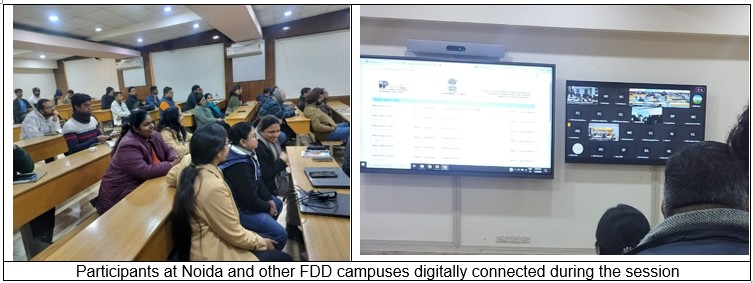
A comprehensive seminar on Intellectual Property Matters was successfully conducted on 9th January 2026 at the FDDI Noida, with all FDDI campuses digitally connected for participation. The session was delivered by Mr. Tarun Khurana, Partner and IP Attorney, Khurana & Khurana (K&K), a leading Intellectual Property, Tax, and Commercial/Corporate Law practice in India.
Khurana & Khurana is a highly reputed firm, recognized by Legal 500, Asia IP, RSG, IAM, Chambers, Managing IP, among others. With 10 offices across India and a team of over 330 professionals, the firm represents clients ranging from start-ups to Fortune 5 corporations. K&K also advises several premier academic and research institutions including IISc, IITs, TIFR, JNCASR, Manipal University, VIT-AP, ICT, DCE, and multiple NITs.
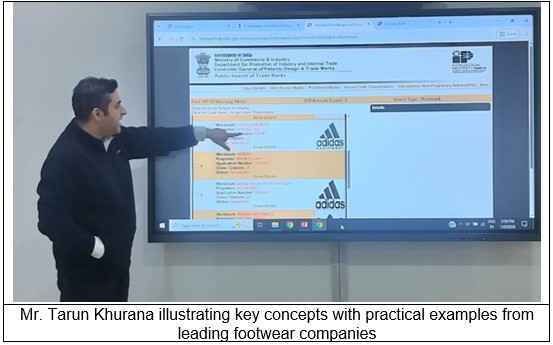
During the seminar, Mr. Khurana provided an in-depth overview of Intellectual Property Rights (IPR), elaborating on the various types of IPRs along with their purpose, benefits, and duration of protection. He introduced the relevant IPR Acts in India and explained the key differences between patents and design registration. The session covered the step-by-step process of filing IPRs, including essential legal requirements, and discussed the strategic choice between provisional and complete specifications. He further highlighted the core patentability criteria—novelty, non-obviousness, and utility—while also addressing non-statutory subject matter under Section 3 of the Indian Patent Act. Emphasis was laid on the importance of quality drafting and effective claim strategy, along with the rights conferred by IPRs and their commercialization potential. To make the session more relatable, he illustrated key concepts with practical examples from leading footwear companies, helping participants understand how intellectual property plays a crucial role in protecting designs, technology, branding, and innovation in the footwear industry.
The session also highlighted strategic aspects such as patent searches (Patentability, Validity, Freedom-to-Operate), international filing under the PCT route, and common drafting dilemmas in securing optimal protection.
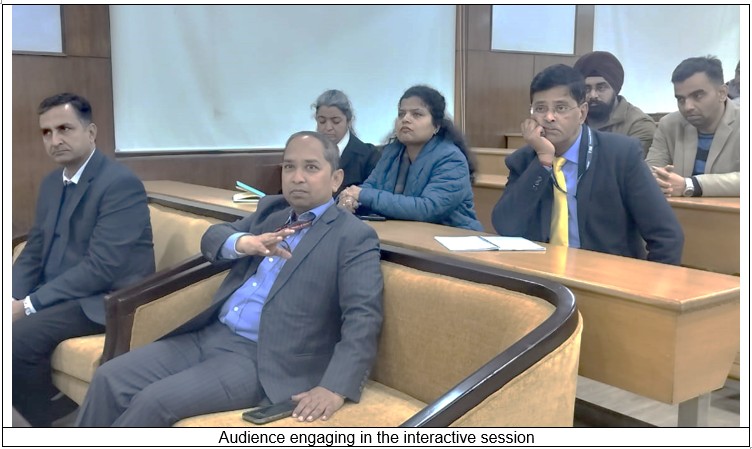
An engaging and interactive Q&A session followed, where participants actively sought clarifications on filing procedures, protection strategies, and commercialization pathways. The seminar significantly enhanced awareness among faculty, researchers, and students about protecting innovations and leveraging intellectual assets effectively.
The session reaffirmed FDDI’s commitment to strengthening research, innovation, and IP culture across its campuses.